What Are Pre-Consumption Behaviors?#
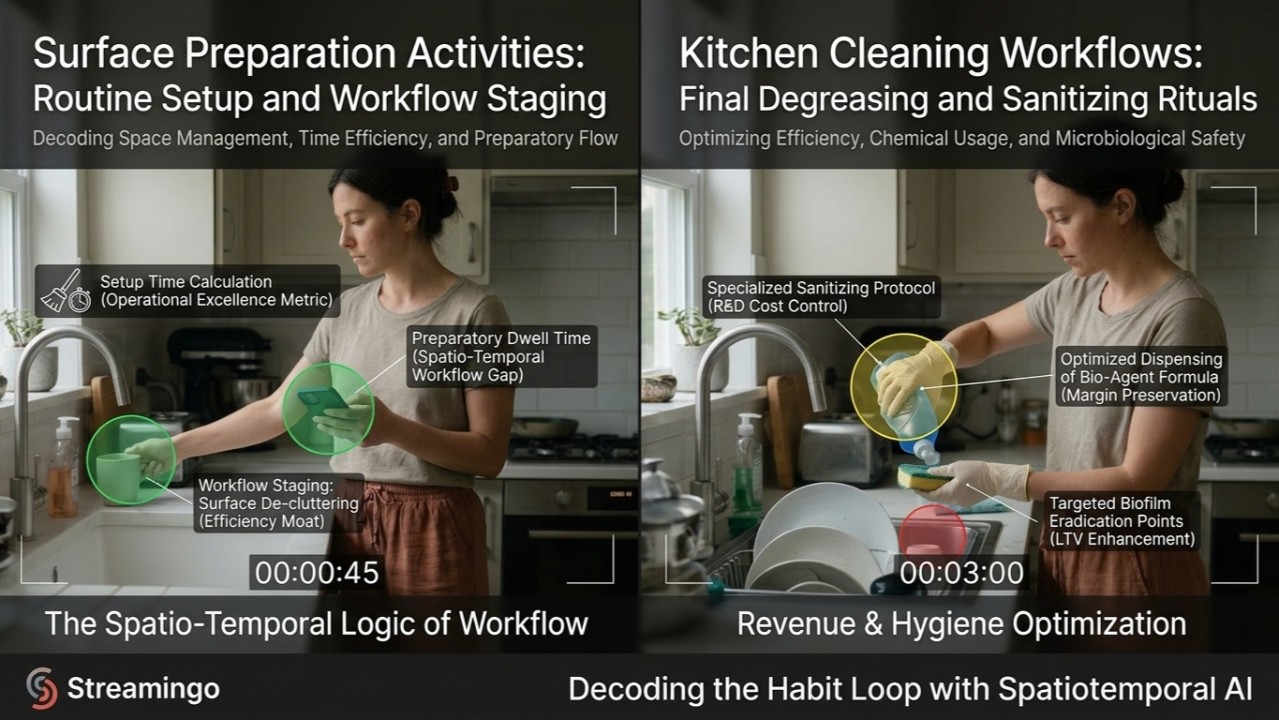
Pre-consumption behaviors are the subconscious, unscripted micro-rituals consumers execute immediately before directly engaging with a product.
In a kitchen cleaning routine, for instance, a consumer rarely grabs a spray bottle right away. Instead, they run through an automated sequence:
- Setting aside a coffee mug
- Testing counter stickiness with the back of a knuckle
- Wiping damp hands on their jeans
- Positioning their smartphone to play music
These micro-actions form the behavioral bridge between the initial intent and the physical act of consumption.
The seconds before the spray bottle: where real product friction hides.
The Impact on Understanding Consumer Behavior#
For decades, consumer research has suffered from a critical "Say-Do" gap caused by human memory limitations:
- The Invisible Routine: because pre-consumption actions occur on cognitive autopilot, consumers cannot self-report them in focus groups, diary studies, or traditional surveys.
- Context Over Intent: isolating product usage ignores the contextual triggers that drive usage in the first place.
- True Friction Mapping: observing the entire sequence reveals whether a product acts as a natural extension of an existing habit or forces users to awkwardly break their stride.
How It Enables CPG Companies to Design for Daily Kitchen Activities#
Decoding the moments leading up to product use enables R&D and product development teams to design solutions that directly support kitchen cleaning workflows and surface preparation activities:
- Kitchen Activity & Surface Preparation: observing how consumers move around the kitchen before cleaning, such as clearing countertops, wiping down prep zones, or handling wet utensils, helps teams design products that fit active meal prep and surface preparation workflows.
- Daily Cleaning Routines: mapping multi-step kitchen cleaning rituals lets designers tailor spray patterns, wipe textures, and soap dispensing to spontaneous touch-ups and heavy-duty meal cleanup alike.
- Multi-Modal Product Formulations: understanding the physical state of the surface right before application (for example, dry dust versus sticky grease) allows chemists to formulate viscosity, foaming power, and evaporation rates to match actual conditions.
The Revenue and Commercial Impact#
Bridging the pre-consumption gap shifts qualitative research from a cost center into a direct driver of top- and bottom-line growth.
| Lever | How it works | Outcome |
|---|---|---|
| De-risking capital allocation | Engineer products to fit subconscious habits | Less commercialization waste |
| Premium margin tiers | Remove subtle, unarticulated pre-use friction | 15–25% price premium over commodity |
| Velocity and retention | Slide into existing cognitive habit loops | Faster use frequency, shorter replenishment, higher LTV |
| High-intent marketing | Anchor messaging in real behavioral cues | Higher ad recall and conversion |
- De-Risking Capital Allocation: given that over 75% of new CPG product launches fail due to poor consumer adoption, engineering products to fit subconscious habits dramatically cuts commercialization waste.
- Unlocking Premium Margin Tiers: packaging that removes subtle, unarticulated pre-use friction creates convenience advantages that justify 15–25% price premiums over commoditized alternatives.
- Accelerating Velocity and Retention: products that slide into existing cognitive habit loops achieve faster frequency of use, shorter replenishment cycles, and higher lifetime customer value (LTV).
- High-Intent Marketing Triggers: creative messaging anchored to real behavioral cues, such as showing the actual tactile test on a counter, drives significantly higher ad recall and conversion than generic product demonstrations.
Ready to Uncover Your Brand's Subconscious Habit Loops?#
The most valuable consumer data isn't found in what people write on surveys. It's hidden in the micro-seconds before they even use your product. If your CPG brand is still relying on manual video logging or self-reported focus groups, you are missing the spatiotemporal triggers that drive true brand loyalty.
Stop guessing the "Why." Start mapping the "How."
Discover how spatiotemporal video intelligence can close your consumer behavior blind spot and enhance your consumer insights journey.
👉 Book a Platform Demo TodayGlossary of Key Terms#
- Pre-Consumption Behavior
- Subconscious, unscripted micro-rituals consumers execute immediately before directly engaging with a product, forming the bridge between intent and consumption.
- Say-Do Gap
- The difference between what consumers report in surveys, focus groups, and diary studies and what they actually do, caused largely by human memory limitations.
- Friction Mapping
- Observing an entire behavioral sequence to reveal whether a product extends an existing habit naturally or forces users to break their stride.
- Habit Loop
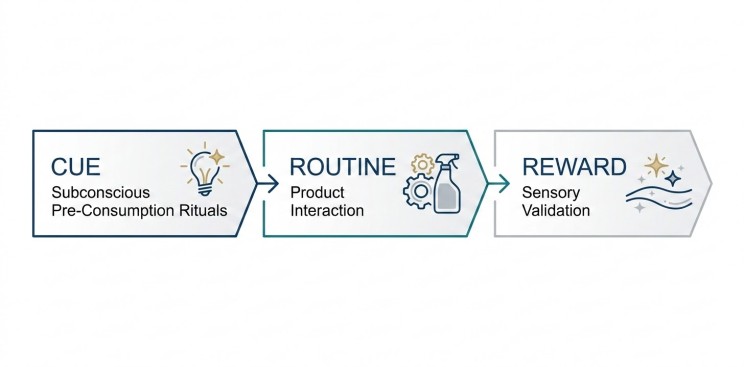
- A cue-routine-reward pattern that runs on cognitive autopilot; products that slide into existing habit loops achieve faster frequency of use.
- Spatiotemporal Video Intelligence
- Video analysis that tracks where and when actions occur in sequence, capturing the micro-second triggers that precede product use.
- Customer Lifetime Value (LTV)
- The total revenue a business can expect from a customer over the relationship; higher when products fit habits and shorten replenishment cycles.
Frequently Asked Questions#
What are pre-consumption behaviors?
Subconscious micro-rituals consumers perform right before using a product, such as setting aside a mug, testing a counter with a knuckle, wiping hands on jeans, or positioning a phone before picking up a spray bottle.
What is the say-do gap in consumer research?
The difference between what consumers report in surveys and focus groups and what they actually do. Pre-consumption actions happen on autopilot, so people can't recall or self-report them.
Why can't surveys and focus groups capture pre-consumption behavior?
The behaviors are subconscious, so consumers don't remember them. Isolating product usage also strips out the contextual triggers that cause usage, which is why the whole sequence must be observed.
How does pre-consumption intelligence help CPG product design?
It lets R&D fit products into real workflows, tailor spray patterns, wipe textures, and dispensing to real routines, and match viscosity, foaming, and evaporation to actual surface conditions like dry dust versus sticky grease.
How does pre-consumption intelligence affect CPG revenue?
It de-risks launches, supports 15–25% price premiums, speeds frequency of use and LTV by fitting existing habit loops, and enables marketing built on real behavioral cues for higher recall and conversion.
What is spatiotemporal video intelligence?
Video analysis that captures where and when actions happen in sequence, surfacing the micro-second triggers before product use that manual video logging and self-reported research miss.