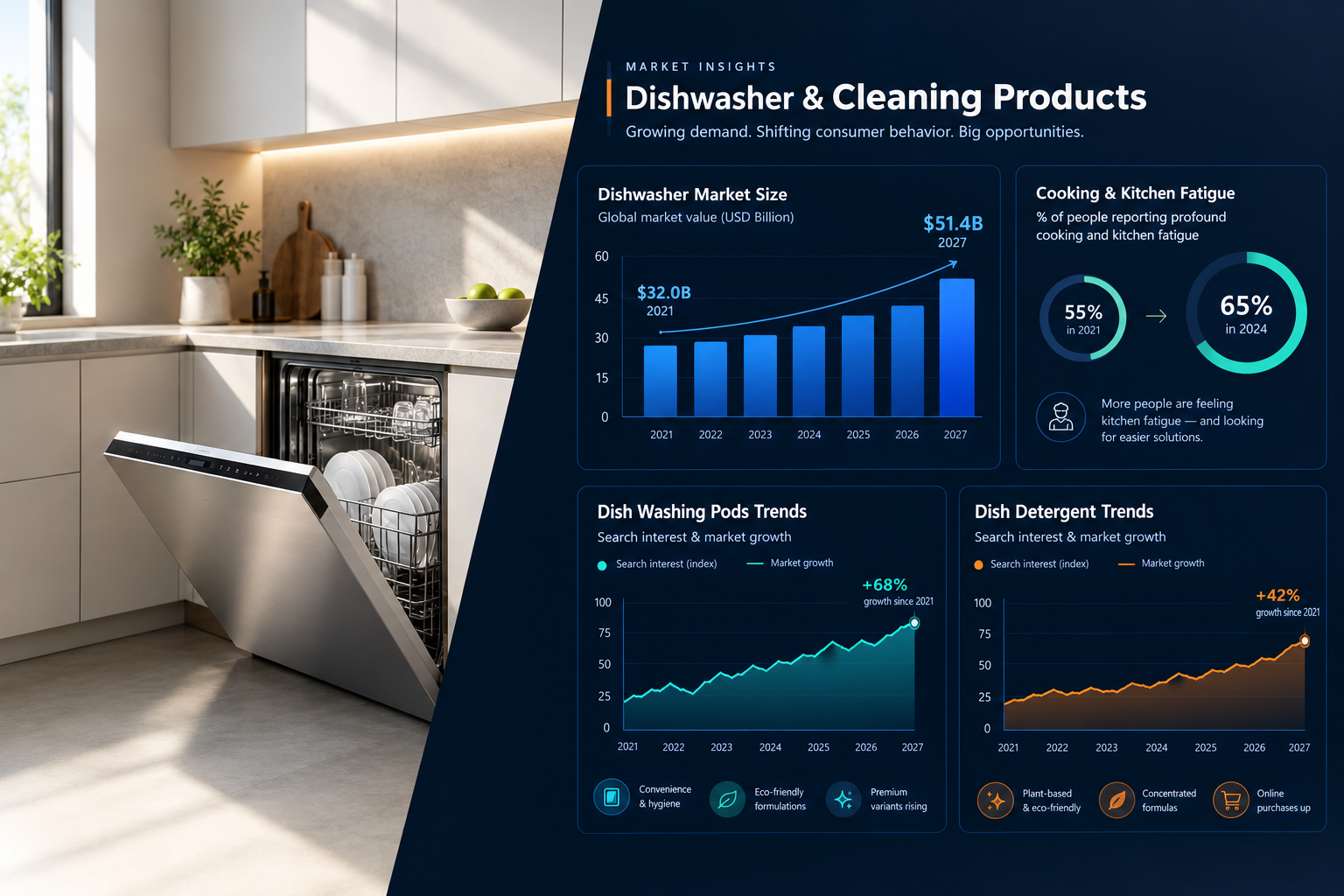
The COVID-19 pandemic initiated a historic renaissance in home cooking. Locked out of restaurants, millions of people turned their kitchens into artisanal bakeries and multi-course laboratories. But the era of sourdough starters and complex quarantine recipes masked a grueling byproduct: an unprecedented mountain of dirty plates, pots, and pans.
This phenomenon, quickly termed "dish fatigue," triggered a permanent psychological shift in how households view kitchen labor. The relentless grind of manual cleaning drove an aggressive, multi-year migration toward home automation, cementing the dishwasher as a non-negotiable household necessity and fueling a massive market for premium detergent pods.
The Anatomy of Dish Fatigue#
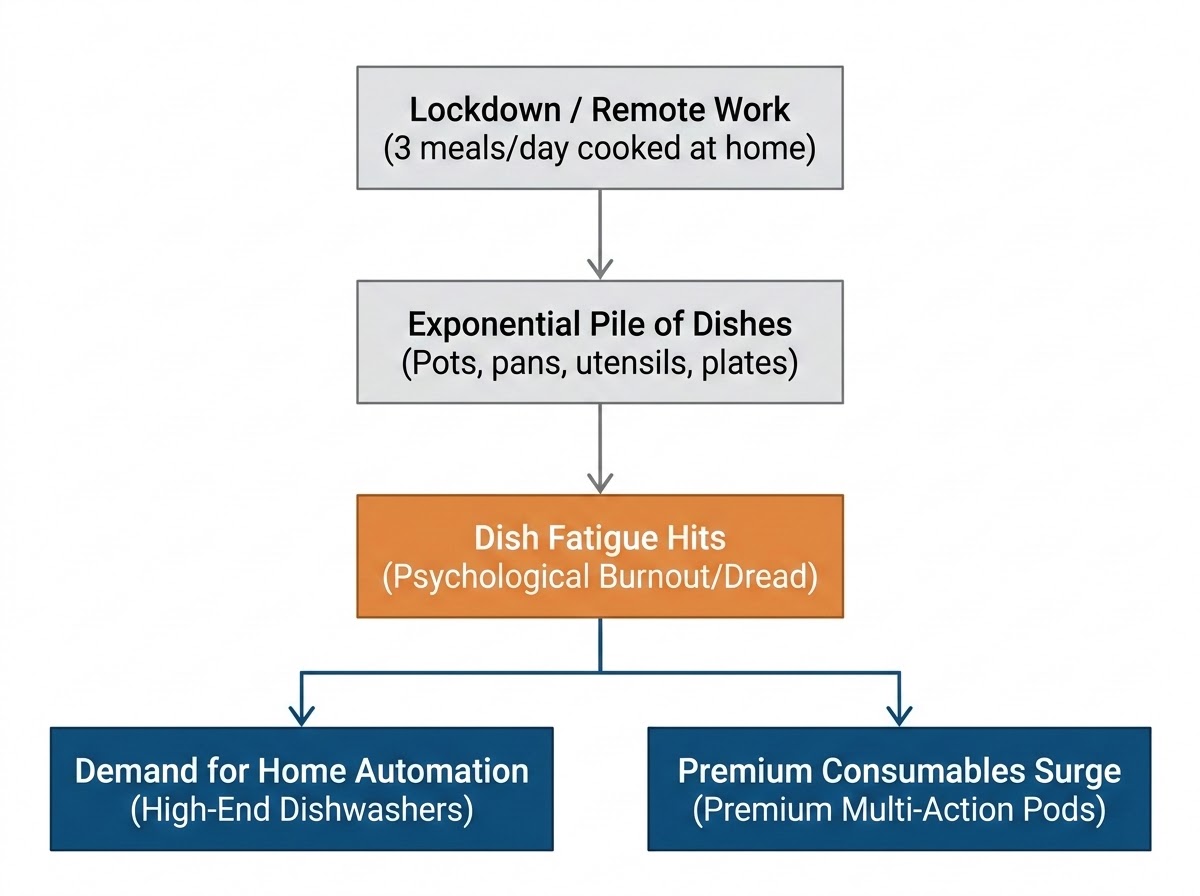
The endless loop of meal prepping, eating, and scraping collided with a harsh reality: doing the dishes by hand is among the least liked household chores.
The friction was intensified by cultural and structural factors. In western countries, families working and studying from home watched their sinks constantly overflow. In emerging markets, strict lockdowns meant affluent households suddenly lost access to domestic help, forcing millions to confront manual dishwashing for the first time. The aversion to the kitchen sink evolved from a temporary annoyance into a permanent desire to outsource the labor entirely.
The Appliance Boom: From Luxury to Utility#
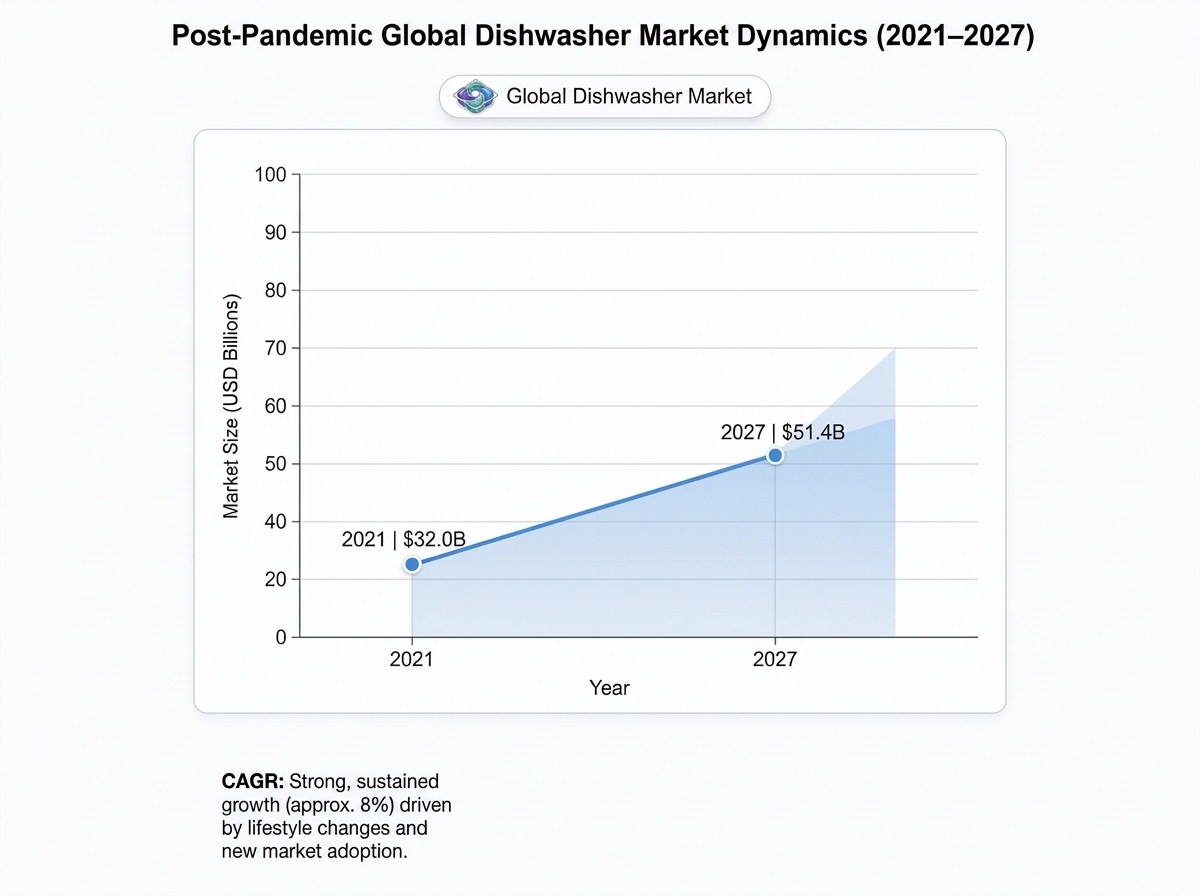
Before the pandemic, dishwashers were often viewed as an optional luxury or an inefficient "water-guzzler" in many parts of the world. The pandemic debunked those myths.
When consumers realized that manual dishwashing with pre-rinsing can consume up to 100 litres of water, compared with a modern dishwasher cycle's minimal footprint, the financial and environmental logic flipped. Major appliance brands reaped the rewards, and the global dishwasher market scaled rapidly on the back of these shifting domestic habits.
The Shift to Premium Detergents and Pods#
The dread of stuck-on food did more than sell machines. It disrupted the consumer packaged goods (CPG) industry.
Pandemic chefs were experimenting with complex, oily, or baked-on recipes such as lasagnas and starchy comfort food, and they quickly learned that cheap powder or liquid detergents required extensive pre-rinsing or re-washing. To protect their new appliance investments and eliminate manual touchpoints, consumers turned to premium multi-chamber units like Cascade Platinum Plus or Finish Quantum.
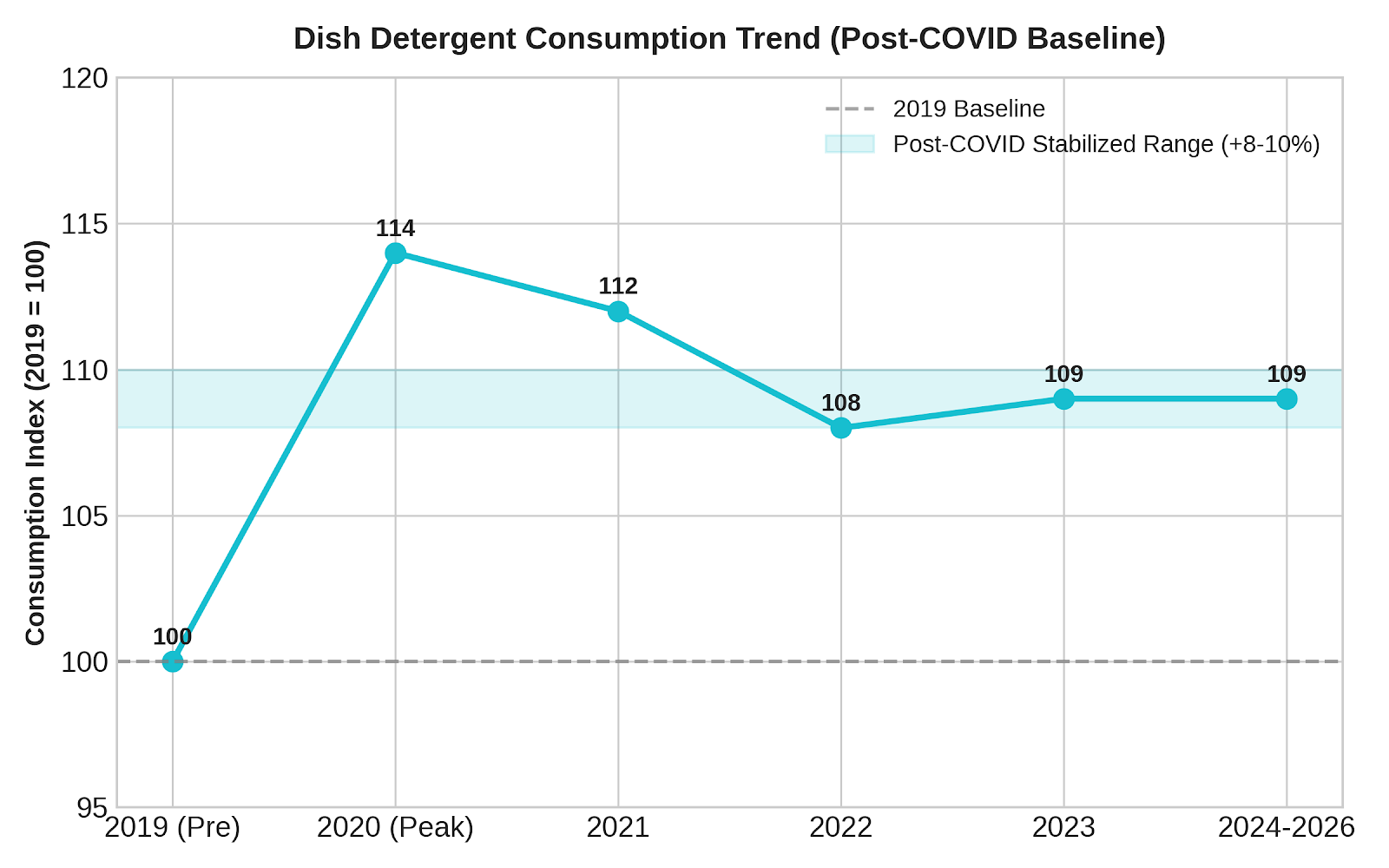
Syndicated retail point-of-sale (POS) scanner data shows that dish detergent consumption did not return to 2019 levels after the pandemic. Volume has instead stabilized at a permanent baseline 8% to 10% above pre-COVID levels, sustained by work-from-home lunches.
| Format | Share of preference | Trend |
|---|---|---|
| Single-dose pods / tablets | 82% | Dominant and growing |
| Gels | 12% | Losing shelf space |
| Powders | 6% | Losing shelf space |
- Single-Dose Pod Empire: pods and tablets now command 82% of consumer preference in automatic dishwashing, while traditional gels (12%) and powders (6%) continue to lose shelf space.
- Dual-Format Households: consumers increasingly run a dual-cleaning routine, with unit-dose pods for full nightly machine runs and countertop liquid pump soaps for midday work-from-home snack and cook cleanup.
The Data Gap: Limitations of Traditional Analytics#
Traditional consumer measurement tools such as retail audits, focus groups, and surveys are slow, subjective, and miss key micro-behaviours. Real-time tracking would let CPG brands build and deliver products as demand peaks, avoiding supply delays and misaligned marketing.
So is there a technology-driven solution that could have helped CPG companies act on these shifts dynamically and proactively? Yes. It would need to watch, tag, and analyze behaviour trends daily, and generate insights as quickly as the data is collected at scale. That data has to be video, and it has to preserve the PII of the consumers participating in the study.
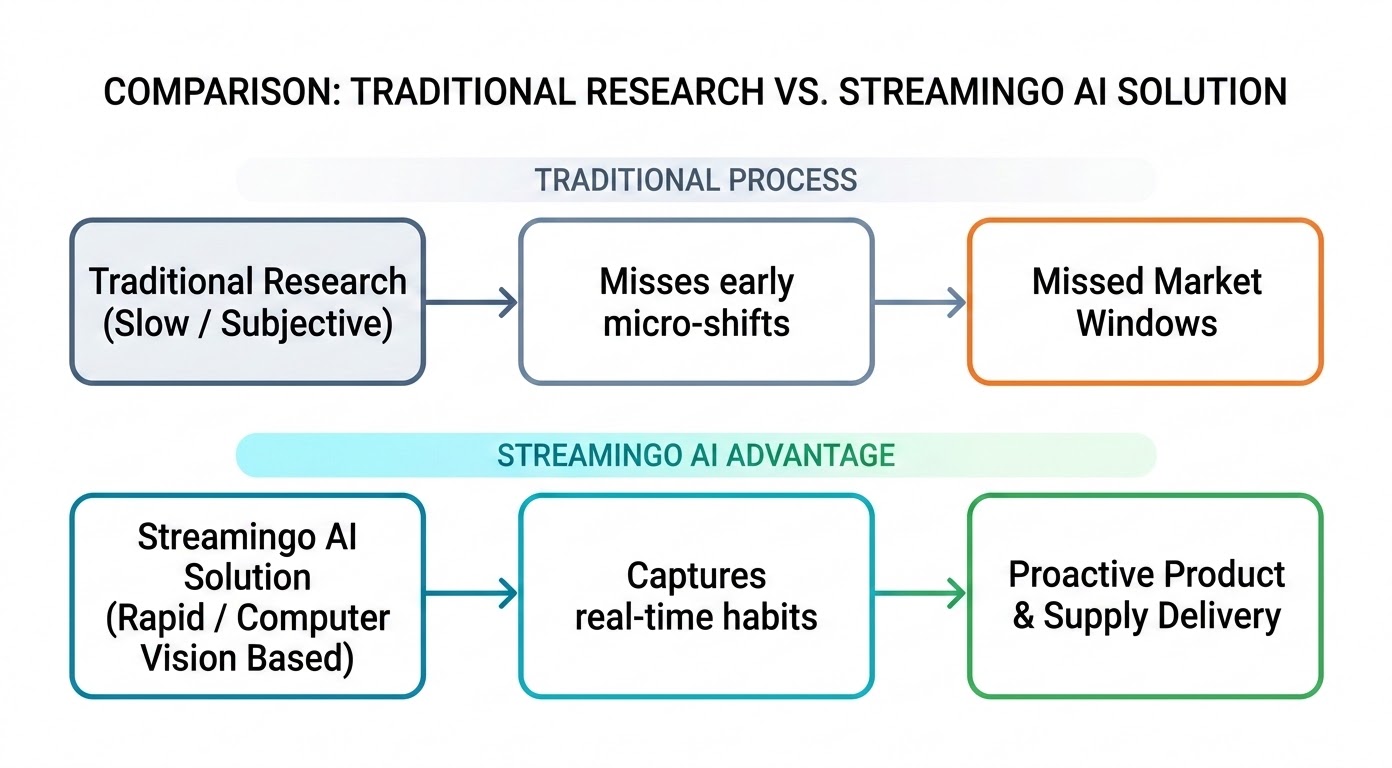
At Streamingo, we built exactly this solution and have scaled it with the largest global CPG majors. It lets enterprise brands intercept emerging household changes as they happen, bypassing the lag of traditional research. To protect your product pipeline and catch the next major consumer evolution before your competitors do, talk to us at Streamingo.
Glossary of Key Terms#
- Dish Fatigue
- Burnout from the endless cycle of cooking, eating, and washing dishes, which surged during COVID-19 lockdowns and drove a permanent shift toward dishwashing automation.
- Single-Dose Pod
- A pre-measured, often multi-chamber dishwasher detergent unit, such as Cascade Platinum Plus or Finish Quantum, that removes manual dosing and pre-rinsing.
- Dual-Format Household
- A household that uses unit-dose pods for full nightly dishwasher runs and countertop liquid pump soap for quick midday hand cleanup.
- Point-of-Sale (POS) Scanner Data
- Syndicated retail transaction data captured at checkout, used to measure product volume and category trends.
- Consumer Packaged Goods (CPG)
- Fast-moving consumer products sold through retail, such as household cleaning, food, and personal care items.
- Video Activity Detection
- A computer vision method that watches, tags, and analyzes real behaviour from video at scale, generating insights as fast as data is collected while preserving participant privacy.
Frequently Asked Questions#
What is dish fatigue?
The burnout from constant cooking and dishwashing during COVID-19 lockdowns. Consumers cooked about nine times a week and 55% to 65% reported profound kitchen fatigue, driving a lasting desire to automate dish cleaning.
How did the pandemic change dishwasher adoption?
Dishwashers shifted from optional luxury to household necessity once consumers saw that hand pre-rinsing can use up to 100 litres of water versus a modern dishwasher cycle's minimal footprint.
Why did dishwasher detergent pods grow after the pandemic?
Oily, baked-on pandemic recipes defeated cheap powders and liquids, pushing consumers to premium multi-chamber pods like Cascade Platinum Plus and Finish Quantum. Pods now hold 82% of preference, versus 12% for gels and 6% for powders.
Has dish detergent consumption returned to pre-pandemic levels?
No. POS scanner data shows volume has stabilized roughly 8% to 10% above 2019 levels, sustained by work-from-home lunches.
Why do traditional analytics miss shifts in household behaviour?
Retail audits, focus groups, and surveys are slow, subjective, and miss micro-behaviours, so brands often learn of a shift after demand has already peaked.
How can video analytics help CPG brands track consumer behaviour in real time?
Video activity detection watches, tags, and analyzes behaviour at scale and generates insights as fast as data is collected, while preserving participants' PII, so brands can react to household changes as they happen.