How Synthetic Data Is Created for Market Research#
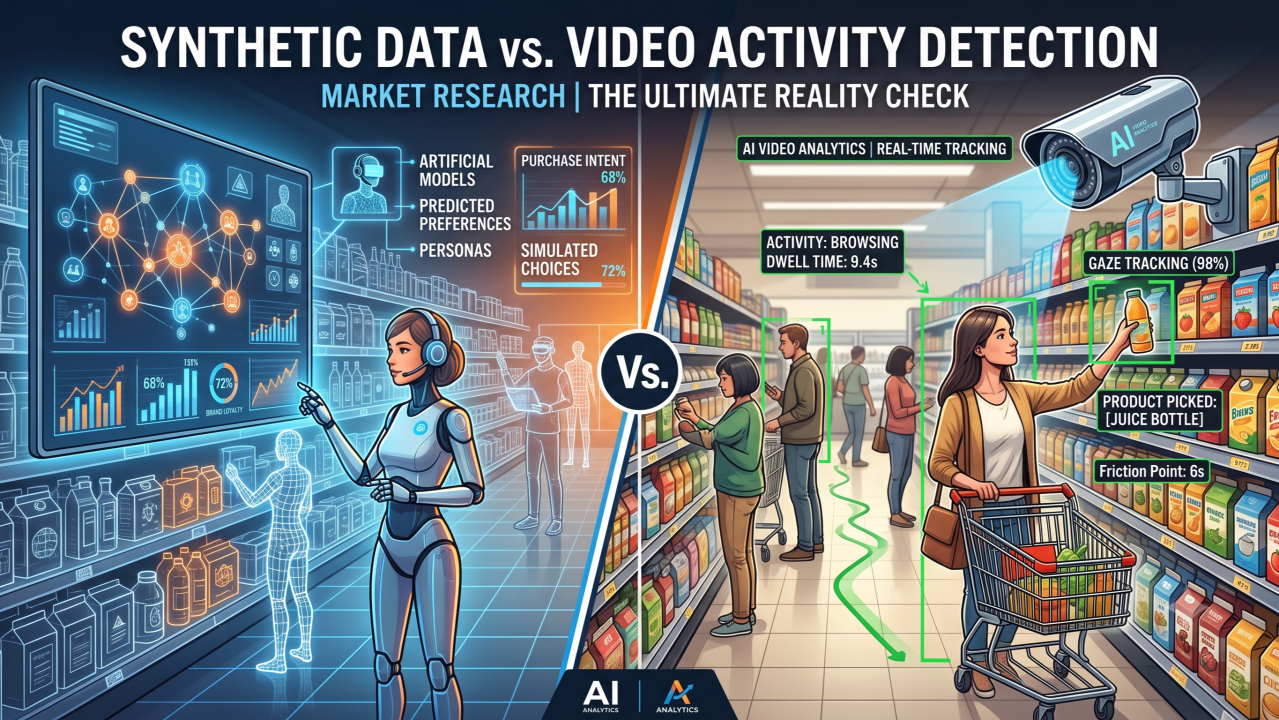
Synthetic consumer data relies on generative AI models trained on historical survey databases, syndicated sales records, demographic profiles, and legacy focus group transcripts. The workflow typically follows three stages:
Persona Modeling
Researchers program "synthetic personas" tailored to specific demographics, psychographics, and brand affinities.
Simulated Choice Sets
AI agents are fed prompt scenarios — pricing changes, package re-designs, or new product claims.
Virtual Response Generation
The platform simulates thousands of virtual survey responses or conjoint choices in minutes, without surveying a single human.
The Potential Issues in the Synthetic Foundation#
While synthetic data excels at low-cost, preliminary concept screening, relying on it for core consumer behavior decisions carries potential structural flaws.
-
The Historical Drift Echo Chamber AI models can only project based on past data. They fail to predict novel cultural shifts, emerging micro-trends, or unprompted emotional reactions to brand shifts.
-
The Rationalization Trap Generative models output choices based on logical linguistic patterns. Real human purchasing, however, is driven by subconscious impulse — synthetic personas rationalistically select options that actual shoppers routinely ignore.
-
Zero Physical Context Synthetic agents operate in a vacuum. They cannot model how real-world variables — shelf glare, aisle crowding, package weight, or visual clutter — alter shopper focus.
Video Activity Detection: Grounding Insights in Reality#
Video activity detection replaces simulated assumptions with computer vision and multi-modal spatial tracking. By analyzing raw video feeds from retail aisles, smart carts, or testing labs, computer vision algorithms automatically detect, tag, and quantify unprompted human physical interactions.
📊 Metric Capture
Converts optical video into discrete data points — shelf dwell time, visual gaze paths, pick-up-to-put-back ratios, and product handling duration.
🎯 Friction Identification
Isolates physical micro-interactions, such as a shopper scanning an ingredient label for six seconds before abandoning the product.
Why Video Activity Detection Delivers Superior Objectivity#
Synthetic data shows how an idealized persona ought to act based on past datasets. Video activity detection reveals how actual humans do act when confronted with choices in real time.
Simulated Preference
- Projects forward from historical datasets only
- Outputs rationalized, linguistically logical choices
- No awareness of physical retail environment
- Fast and cheap for early-stage concept screening
Observed Behavior
- Captures unprompted, real-time physical reactions
- Reflects subconscious impulse, not rationalized logic
- Accounts for shelf glare, crowding, clutter, and package feel
- Provides a defensible basis for trade-spend decisions
For consumer packaged goods (CPG) brands allocating millions in trade spend, observed physical behavior will always provide a far safer foundation for investment than simulated preference. Synthetic data has a real role to play early in the funnel — but the closer a decision gets to real dollars on real shelves, the more it depends on knowing what people actually do, not what a model predicts they might say.
The author represents Streamingo.ai, a company focused on automating consumer behaviour understanding using activity detection algorithms.
Glossary of Key Terms#
- Synthetic Data
- AI-generated consumer response data produced by generative models trained on historical surveys, sales records, and demographic profiles, used to simulate market research responses without surveying real people.
- Synthetic Persona
- A programmed AI agent tailored to specific demographics, psychographics, or brand affinities, used to generate simulated survey or conjoint responses.
- Video Activity Detection
- A computer vision method that analyzes real video feeds to automatically detect, tag, and quantify unprompted human physical interactions, such as shelf dwell time or gaze paths.
- Shelf Dwell Time
- The amount of time a shopper spends looking at or standing in front of a specific product or shelf section, measured via video activity detection.
- Gaze Path Analysis
- Tracking the sequence and duration of where a shopper's eyes move across a shelf or display, used to identify what draws or loses visual attention.
- Trade Spend
- The budget a CPG brand allocates to retailers for promotions, shelf placement, and merchandising, often the largest controllable marketing expense for consumer goods companies.
- Historical Drift Echo Chamber
- A limitation of synthetic data in which AI models, since they can only project from past data, fail to predict novel cultural shifts or emerging trends.
- Rationalization Trap
- A limitation of synthetic data in which generative models output logically rationalized choices, while real human purchasing is often driven by subconscious impulse rather than logic.
Frequently Asked Questions#
What is synthetic data in market research?
AI-generated consumer response data created by models trained on historical surveys, sales records, and demographic profiles. Researchers program "synthetic personas," feed them prompt scenarios, and the platform simulates thousands of virtual responses in minutes without surveying real people.
What are the main problems with using synthetic data for consumer research?
Three structural risks: the Historical Drift Echo Chamber (it can't predict novel trends), the Rationalization Trap (it outputs overly logical choices vs. real subconscious impulse), and Zero Physical Context (no awareness of shelf glare, crowding, or package feel).
What is video activity detection?
A computer vision approach that analyzes raw video from retail aisles, smart carts, or testing labs to automatically detect and quantify unprompted human physical interactions — converting shopper behavior into metrics like shelf dwell time and gaze paths.
How does video activity detection differ from synthetic data?
Synthetic data projects rationalized choices from historical data with no physical context. Video activity detection captures unprompted, real-time physical reactions that reflect subconscious impulse and real-world retail conditions — a more defensible basis for trade-spend decisions.
Should CPG brands still use synthetic data at all?
Yes, for low-cost, early-stage concept screening. But the closer a decision gets to real trade-spend dollars, the more it should rely on observed behavior from video activity detection rather than simulated preference alone.